What's new
- 2025-10-15 Tentative page created.
- 2025-10-30 updated
- 2025-11-12 This web page has been published.
- 2026-02-26 Abstruct deadline and payment method has been changed.
- 2026-03-18 Information about the keynote speakers has been posted. Information about the proceedings has been added.
- 2026-03-24 Information about the keynote speakers has been updated.
- 2026-04-17 Proceeding and Detailed Schedule has been updated.
- 2026-04-18 Proceeding and Detailed Schedule has been final updated.
- 2026-05-07 Information regarding Abstracts and Proceedings has been updated.
- 2026-05-08 Information regarding Abstracts and Proceedings has been updated.
Aims of the event
“Forest culture” is a broad concept that encompasses the outcomes of people’s long-standing engagement with the diverse resources and environments that forests provide to human societies. It includes multiple dimensions of human life—such as food, clothing, shelter, science, technology, education, art, ethics, religion, and governance. As culture evolves in close relationship with its surrounding natural environment, distinct forest cultures emerge in different regions, each reflecting unique ecological and social characteristics.
As a step toward advancing forest culture research in the Asian region, this meeting seeks to bring together researchers and practitioners engaged in the study of forest–human relationships, to build collaborative networks and deepen cross-disciplinary discussions.
The theme of the International Research Meeting of Forest Culture Science in Asia (FOCUS-Asia 2026) is “Forest Diversity and Local Culture.”
This year’s symposium highlights the vital interconnections between biological diversity and cultural practices rooted in forest ecosystems.
The event features three thematic sessions:- Track 1: Forest Diversity – addressing the ecological variety, resilience, and conservation of forests;
- Track 2: Community Roots of Forest – exploring the cultural, social, and historical relationships between local communities and forest landscapes;
- Track 3: Health and Tradition from Forest – examining how forest resources support human health, spirituality, and well-being.
Link to the web page of previous meeting

Call for Abstracts
The 2026 International Research Meeting of Forest Culture Science in Asia (FOCUS-Asia) invites researchers, practitioners, and students to submit abstracts under the overarching theme “Forest Diversity and Local Culture.”
This year’s symposium aims to explore the interrelationship between forest ecosystems and human societies, emphasizing how ecological and cultural diversity together shape sustainable futures across Asia. Participants are encouraged to present studies that bridge natural sciences, social sciences, and humanities to advance the understanding of forest culture science in its broadest sense.
This theme focuses on the ecological richness and complexity of forest ecosystems across Asia. Submissions may address topics such as ethnobotany, biodiversity, ecosystem functions, landscape dynamics, and adaptive forest management. Studies on genetic and species diversity, forest restoration, climate change resilience, and the sustainable use of forest resources are particularly welcome.
Research that integrates botany, ecology, environmental science, and policy to reveal the links between ecological diversity and cultural forest landscapes is especially encouraged.
This theme explores the deep social and cultural connections between local communities and forest environments. It invites studies on traditional forest management systems, community-based resource governance, and the transmission of cultural knowledge through rituals, craftsmanship, and storytelling.
Contributions examining how forest culture integrates into human settlements, cultural landscapes, and regional development strategies are highly valued.
We particularly welcome interdisciplinary approaches from anthropology, sociology, history, landscape architecture, rural planning, and cultural geography to illuminate how local cultures embody and sustain forest ecosystems.
This track investigates the role of forests in supporting human health, traditional medicine, and cultural healing practices. It welcomes interdisciplinary research connecting ethnobotany, pharmacology, traditional ecological knowledge, and public health.
Topics may include forest-derived foods and medicines, cultural landscapes for mental and physical well-being, and the revitalization of traditional healing wisdom in contemporary society.
Studies that explore the interface between science and tradition or address the sustainable use of forest resources for health and well-being are particularly encouraged.
Venue
Time
18th - 24th April 2026
Abstracts and Proceedings
- The abstract collection will be published on the website prior to
the conference. Participants wishing to present must prepare and submit
their abstracts in the prescribed format by the deadline. Presentations
cannot be made without submitting an abstract.
FOCUS-Asia 2026 Proceeding - Accepted and presented papers will be published in the Proceedings Journal BIO Web of Conferences, indexed by Scopus.
Each article requires a payment of 100 USD upon acceptance.
The submission deadline is May 15th, 2026. Please upload files to follow link.Template Files and Upload Folders - Participants wishing to submit their work for peer review may submit to the “Sustainability” journal. For details on submission methods and manuscript formatting, please consult the “Sustainability” journal website.
Schedule
- Day 1: Arrival, Campus Tour, Lunch & Dinner at the Iconic Restaurant
- Day 2: Plenary Session /Poster Session
- Day 3: Plenary Session /Research Group Session /Poster Session & Closing Ceremony
- Day 4: Field Excursion to Wanagama Science Eco-Edu Forest
- Day 5: Field Excursion, Borobudur Temple tour, Malioboro shopping, visiting Yogyakarta Chinatown
- Day 6: Check out from University Club Hotel, moving to ibis Hotel (near YIA Airport), Forest Culture Field Excursion
- Day 7: Departure
Keynote Speakers

Dr. Wawan Sujarwo is an ethnobotany expert and research professor at the National Research and Innovation Agency of Indonesia(BRIN). He also serves as the Executive Director of the Ethnobiological Society of Indonesia (PMEI), Expert Council at the Yayasan Negeri Rempah (YNR) and the Majelis Adat Kerajaan Nusantara (MAKN), Vice Chair of the Indonesian Researchers Association (PPI) - Bali Province, Editor in Chief of the Journal of Tropical Ethnobiology (JTE), Senior Editor of Ethnobotany Research and Application (Q1, Scopus-Indexed), and Editorial Board member of the Journal of Ethnobiology and Ethnomedicine (Q1, Scopus-Indexed). His primary area of research is the relationship between plants and people. He has widely documented Balinese ethnobotanical knowledge in many renowned international journals. He also held several positions, including Director of Cibodas Botanical Gardens and Head of Scientific Information and Services at Bali Botanical Gardens. He obtained a Bachelor's degree in Forestry from Gadjah Mada University and a Ph.D. in biodiversity and ecosystem analysis from Università Degli Studi di Roma Tre, Italy.

Professor and Lead Expert at the Chinese Academy of Forestry (CAF), Director of the Chinese Forest Ecosystem Positioning Research Network Management Center, and Doctoral Supervisor. He serves as the Principal Investigator of the Long-term Ecosystem Observation and Network Management Research Group at the CAF Institute of Forest Ecology, Environment, and Protection, and is a member of the China National Committee for the Global Climate Observing System (GCOS). Dr. Wang specializes in long-term observation and modeling of key terrestrial ecosystem processes, forest ecosystem service evaluation, ecological compensation mechanisms, eco-GDP accounting, and standardization systems for forest ecosystem monitoring. His work integrates scientific insights into national ecological policy-making, advancing sustainable forest management frameworks in China.
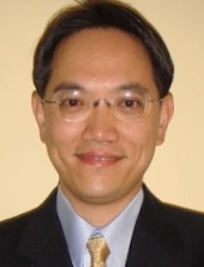
Dr. Chiang Wei had worked in National Taiwan University Experimental Forest (NTUEF) for over twenty-two years. Based on the expertise on hydrology and remote sensing, he had applied the related knowledge and experience on the NTUEF forestland management. In addition to the research work, Dr. Chiang Wei had also devoted himself on the implementation on the long-term experimental site, regular forest resources investigation of permanent site, promotion for the smart forestry, state-of-the-art AIOT sensors and techniques for the monitoring forest environment and efficient management for the forest biodiversity. Despite the above efforts, he also was assigned to link and promote the University Social Responsibility (USR), Corporate Social Responsibility (CSR), Co-Prosperity Program, Community Forestry Program to improve the public/civic relationship with the Government, related authorities, local communities, in particular, the aboriginal people living around the NTUEF. On the way for the success of carbon sequestration and biocredit, Indigenous peoples and local communities (IPLCs) plays an important role for the win-win-win strategy. Dr. Chiang Wei had served on the adjunct assistant professor in the department of Civil Engineering, National Taipei University of Technology between 2007 and 2015. He received a grant of National Science Council as the visiting scientist in University of Toronto in 2010 for analyzing the Biosphere-atmosphere Exchange Process Simulator Model applied in Taiwan. He also received several academic research paper awards for Chinese Forestry.

Dr. Shigemitsu SHIBASAKI has served as an associate professor in the Forest Policy Laboratory at the Graduate School of Agricultural and Life Sciences, The University of Tokyo, since 2021. He has studied the feasibility of balancing regional economies with environmental conservation, focusing on remote islands and mountain villages. In the 2000s, he was interested in forest ecosystem services and economic spillover effects, including monetary valuation methods in environmental economics. However, through interactions with local people, he came to believe that reevaluating historical and cultural values, often difficult to quantify in monetary terms, is essential for sustainable regional development, and he began emphasizing research approaches from folklore studies and sociology. In recent years, he has engaged in research and conservation activities related to so-called “forestry heritage,” including historical structures and traces of everyday life associated with forestry.
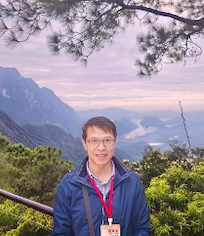
Prof. Phua is a Professor of Forest Remote Sensing and GIS at the Faculty of Tropical Forestry, Universiti Malaysia Sabah. He holds a Master of Environmental Science from the University of Tsukuba and both an MSc and a PhD from The University of Tokyo. His research focuses on assessing tropical forest ecosystem services, particularly carbon storage and recreational services, using remote sensing, GIS, and spatial modeling to support sustainable forest management and community conservation. A globally engaged academic, he has delivered lectures internationally, serves on editorial boards, and received accolades including the inaugural Green Asia Award and the Japan Society of Photogrammetry and Remote Sensing Award.

Prof. Upul Subasinghe is a Professor of Forestry and Environmental Science at the University of Sri Jayewardenepura, Sri Lanka, and currently serves as the Dean of the Faculty of Applied Sciences. With more than three decades of experience in forestry research, teaching, and academic leadership, he has made significant contributions to sustainable forest management, forest-based livelihoods, and plantation forestry in Sri Lanka and the Asian region. Prof. Subasinghe’s research spans diverse areas including agarwood production, sandalwood research, forest ecology, and innovative agroforestry systems such as intercropping forest trees with plantation crops. His work has contributed to improving the economic and ecological value of forest resources while promoting sustainable land-use practices. He has also been actively involved in developing forest management guidelines and certification frameworks that support responsible forestry and biodiversity conservation. Through his academic leadership and research, Prof. Subasinghe continues to promote integrative approaches that connect forest science, sustainability, and cultural heritage.

Prof. Dr. Satyawan Pudyatmoko is a Professor of Wildlife Ecology and Conservation at the Faculty of Forestry, Universitas Gadjah Mada, Indonesia. He currently serves as Director General of the Directorate of Natural Resources and Ecosystem Conservation at the Ministry of Forestry of the Republic of Indonesia. In this role, he is responsible for national programs aimed at maintaining ecosystem support systems, conserving species and genetic diversity, and ensuring the sustainable utilization of living natural resources and their ecosystems. His research focuses on the ecology and conservation of large mammals in tropical forest ecosystems, with particular emphasis on population ecology, interspecific interactions among animals, habitat suitability, landscape-based conservation, and human–wildlife interactions. Over the past decades, he has conducted extensive field research across Indonesia’s protected areas and has published numerous scientific articles on the conservation of endangered mammal species. By integrating scientific research with conservation policy, Prof. Pudyatmoko actively promotes landscape-based approaches to biodiversity conservation. This approach is particularly important for large mammals that require extensive home ranges and heterogeneous habitat mosaics to maintain viable populations in increasingly human-modified landscapes.

Prof. Ho Sang Kang received his B.S., M.S., and Ph.D. degrees from Seoul National University, where he specialized in silviculture and forest ecology. He served as a Research Professor (2006–2019) at the International Environmental Cooperation Center of the National Instrumentation Center for Environmental Management (NICEM), Seoul National University, and has been an Industry–Academia Cooperation Professor at the Institutes of Green Bio Science and Technology (GBST), Seoul National University since December 2019. Prof. Kang has extensive experience in the development, management, and implementation of international cooperation projects across ASEAN, Northeast Asia, Central Asia, and Africa. He served as the Project Manager of a KOICA project on “Capacity Building on Environmental Conservation and Ecotourism Management in Indonesia” in collaboration with the Ministry of Forestry (2007–2009). He also served as the Secretary-General of the ASEAN–Korea Environmental Cooperation Project (AKECOP) from 2009 to 2019. Currently, as the Executive Director of the Asia Forest Institute, he has been implementing various international cooperation projects in partnership with organizations such as Korea International Cooperation Agency (KOICA), International Union of Forest Research Organizations (IUFRO), and Asian Forest Cooperation Organization (AFoCO).

Bill Bleisch grew up in the USA and studied biology at Harvard University (BA 1976) and at Rockefeller University (Ph.D. 1982). In 1987, he organized a joint project for research and conservation surveys of gibbons in China. After that first visit to China, Bleisch came back again in 1988, and then moved to China in 1989 to co-lead a two-year field research project on the endangered Guizhou Snub-nosed Monkey at Fanjing Mountain. He then went on to lead a long-term research project on Tibetan Antelope, a species threatened by wildlife trade (1998-2002). Through his experiences with threatened wildlife species, he became committed to furthering nature conservation in Asia, and went on to work with various international organizations including the Wildlife Conservation Society, Fauna and Flora International, UNDP, and in the GEF Project Office of the Office of Wildlife Conservation and Nature Reserve Management in the Chinese Ministry of Forestry (now the SFA). From 2024 to 2026, Bleisch was Team Lead for the Biodiverse Landscapes Fund Lower Mekong Landscape, working across Cambodia, Vietnam and Lao PDR to support biodiversity conservation and livelihood development for forest-dependent people. His current research interests include the impacts of tourism and how it can be used to further conservation of wildlife and indigenous culture. He also has an ongoing interest in the impact of other effective local conservation measures, such as sacred sites and indigenous and community-conserved areas.

Hui Zhang, Professor, School of Tropical Agriculture and Forestry, Hainan University, China. He has devoted most of his research to understanding how plant species diversity is organized and maintained at multiple spatial scales in a wide range of ecosystems. The importance of variation in plant life histories on one hand, and stochasticity in demographic processes and dispersal on the other, remains a central question in community ecology. He has drawn much of the inspiration for his research from the debates on this question. While this question is of fundamental importance to ecology, he believes this understanding is also increasingly relevant for addressing current challenges in conservation emanating from habitat destruction and environmental change. If we do not understand how ecological communities are built, we cannot understand how they will respond to disruptive forces. His research has contributed in a small way to the growing understanding that both deterministic and stochastic processes play significant roles, and that their relative importance varies with spatial scale, environmental heterogeneity, and even species diversity. In addition to this work on plant communities, He has more recently begun work on wildlife ecology and conservation at landscape scales. Here the goal is to create a metapopulation framework that can be implemented to conserve wildlife populations at landscape scales, where multiple habitats are to be connected by dispersal and gene flow. He is also interested in using plant functional traits to understanding ecosystem response to environmental change and select appropriated plant species to restore disturbed ecosystem.
Presentation
We welcome participation for both oral and poster presentations!
Presentations and discussions during the meeting will be in English.
We are looking forward to receiving abstracts for both presentations.
DEADLINE FOR ABSTRACT SUBMISSION IS 15th MARCH 2026.
The abstract submission is only possible through an online procedure. Please carefully follow the instructions before submitting the abstract.
Guidelines for Poster Presentation
A poster competition for students will be announced soon!
Registration
Please fill out and submit the registration form at the link below. We will reply to you by email after reviewing the content.
Registration Form
Registration Fee
- Full attendance (18th–24th April 2026): 650 USD (Conference meeting + field excursion)
- Partial attendance (18th–20th April 2026): 350 USD (conference meeting only)
- Student (Full attendance): 350 USD (sharing room)
- Accompanying people (Full attendance): 350 USD
- Accommodation for 6 nights
- Meals (breakfast, lunch, dinner, and tea-break snacks)
- Transportation during the meeting
- Conference fee
- Seminar kit, Umbrella and T-shirt
- 3-day Excursion tours including a Ticket for Ramayana Dance at Prambanan temple (for those joining the full attendance)
Payment Methods
Choices of payment method:
- Payment should be made via Telegraphic Transfer (TT), bank transfer, or any suitable method to the following details:
- Bank name: BANK NEGARA INDONESIA
- Account holder name: FOCUS ASIA UGM
- Account holder address: Bulaksumur, Kecamatan Depok, Kabupaten Sleman, Daerah Istimewa Yogyakarta
- Account number: 9884012090451426
- Bank address: Komplek UGM, Skip Blok L-5, Jl. Persatuan Bulaksumur Caturtunggal, Depok-Sleman, Yogyakarta
- Swift code: BNINIDJAXXX
- Cash payment (USD) upon arrival is available for those who prefer it.
- Proof of Payment: Payment proof should be sent to the Symposium Secretariat focus-asia2026@googlegroups.com.
- If you wish to receive an invoice or receipt, please notify the Symposium Secretariat focus-asia2026@googlegroups.com.
Important Dates
- Registration for conference: 1st November 2025 - 31st March 2026 (The deadline for early bird registration is 28th February.)
- Abstract submission: 1st November 2025 - 15th March 2026
- Manuscript for proceedings submission: 30th April 2026
- A poster competition for students will be announced.
Contact Information/ Symposium Secretariat
focus-asia2026@googlegroups.com
Organizer
FOCUS-Asia Committee (FOCUS-Asia Rules)
- Chair
- ISHIBASHI Seiji ( The University of Tokyo , Japan )
- Vice-Chair
- RAHAYU Sri ( Universitas Gadjah Mada , Indonesia )
- SAITO Haruo ( The University of Tokyo , Japan )
- ZHANG Hui ( Hainan University , China )
- Secretariat
- FUJIWARA Akio ( The University of Tokyo , Japan )
- LIANG Huaiyue ( Hainan University , China )
- LI Wan ( The University of Tokyo , Japan )
- Committee
- CHANDRATHILAKE Thilakawansha ( University of Sri Jayewardenepura (USJ) , Sri Lanka )
- FU Hui ( Hainan University , China )
- HUANG Biao ( International Centre for Bamboo and Rattan , China )
- KIM Soyeon ( Catholic Kwandong University , Korea )
- LIU Shoubai ( Hainan University , China )
- LONG Chunlin ( Minzu University of China , China )
- LOPEZ Larry ( Yamagata University , Japan )
- RAHAYU Yen Yen Sally ( National Research and Innovation Agency (BRIN) , Indonesia )
- REN Mingxun ( Hainan University , China )
- WONGLANGKA Warong ( Chiang Mai University , Thailand )
Designed by CSS.Design Sample