What's new
- 2025-01-23 Tentative page created.
- 2025-03-13 Pages revised.
- 2025-04-04 Pages revised.
- 2025-04-15 Pages revised.
- 2025-04-17 Detailed Schedule was uploaded.
- 2025-04-17 The proceedings now avaiable
- 2025-04-18 The proceedings updated
- 2025-08-26 The proceedings final updated
Aims of the event
“Forest culture” is a general term for the results of people's active engagement with the various resources and environments that forests provide to human society. It covers a wide range of areas, including food, clothing, shelter, science, technology, learning, art, morality, religion and politics. Culture is developed based on the natural environment of the region, and a wide variety of “forest cultures” are formed, reflecting the characteristics of the region. As a step towards developing forest culture research in the Asian region, the aim of this meeting is to bring together researchers on “forest culture”, build a research network and deepen discussions.
Link to the web page of previous meeting

Venue
XINGLONG TROPICAL GARDEN & JISEN HOTEL,
XINGLONG TOWN, WANNING CITY, HAINAN, CHINA
Time
18th to 22nd April 2025
Proceedings
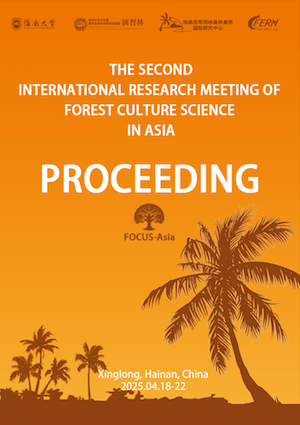
FOCUS-Asia 2025 Proceedings (PDF File 3.5MB)
Schedule
DETAILED SCHEDULE (PDF File 300KB)
- Arrival & Registration
- 19:00-20:00 Welcome dinner
- 7:00- Breakfast
- 8:50-9:20 Welcome Speech
- 9:20-10:10 Keynote Speech
- 10:10-10:30 Tea Break
- 10:30-11:45 Keynote Speech
- 11:45-14:30 Lunch Break
- 14:30-15:20 Keynote Speech
- 15:20-15:40 Tea Break
- 15:40-16:30 Keynote Speech
- 16:30-16:40 Break
- 16:40-17:00 Round-table session
- 19:00-20:30 Dinner
- 7:00- Breakfast
- 8:30 Gather at the Hall and Departure
- 8:30-11:30 Morning Tour in Xinglong Tropical Garden
- 1130-14:00 Lunch Break
- 14:00-15:05 Theme Session - Indigenous Plant Wisdom
- 15:05-15:25 Tea Break
- 15:25-16:15 Theme Session - Community Roots of Forest
- 16:15-17:05 Theme Session - Health and Tradition from Forest
- 17:05-17:15 Short Break
- 17:15-17:30 Closing ceremony
- 19:00-20:30 Dinner
- 6:40-7:50 Breakfast
- 7:50 Gather and Departure
- 8:00-11:30 Tour at Fenjiezhou island, Sanya
- 12:00 Lunch
- Afternoon Tour at Monkey island, Sanya
- 18:00 Return and Dinner
- Goodbye morning party at the Hotel restaurant, host by Hui Zhang
Keynote Speakers
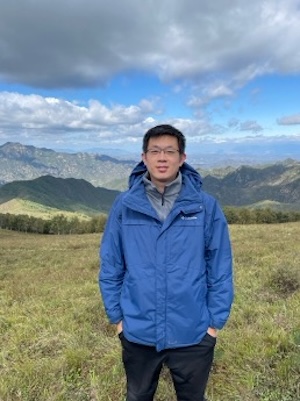
Deputy Dean of the School of National Park at Beijing Forestry University, concurrently serving as Deputy Dean of the School of Ecology and Nature Conservation. Executive Director of the Key Laboratory of National Forestry and Grassland Administration for Urban-Rural Landscape Construction. Selected as a member of the Ministry of Natural Resources' Science and Technology Innovation Team.Specializes in research and practice related to national park, regional ecological networks, green infrastructure and greenway, community gardens, green spaces, and public health.
Awarded the Second Prize of Beijing Municipal Teaching Achievement Award as lead contributor.Principal investigator for over 10 research projects, including those funded by the National Natural Science Foundation of China and the Ministry of Housing and Urban-Rural Development.Led or participated in over 20 major engineering projects, including: Master Planning and Design of Central Green Valley and Eastern Stream Valley in Xiong'an New Area's Start-up Zone, Beijing Sub-center Green Space System Special Planning, Beijing-Zhangjiakou Railway Heritage Park Conceptual Planning and Start-up Zone Design. Recipient of 24 professional awards from organizations including: IFLA Asia-Pacific Region,Chinese Society of Landscape Architecture, American Society of Landscape Architects (ASLA), Royal Institute of British Architects (RIBA), Liang Xi Science and Technology Award. Received two directives from national-level leaders.
Dr. Warong Wonglangka is a distinguished academic and researcher specializing in Landscape Heritage Conservation, Arboricultural Conservation, and Urban Green Space Management. He currently serves as an Assistant Professor in the Department of Landscape Architecture at Chiang Mai University, where he has been contributing to the field of landscape architecture since 2009. In addition to his academic role, Dr. Wonglangka is actively involved in various professional organizations, including his position as Vice President of the Thai Arboriculture Association and as a member of the International Scientific Committee on Cultural Landscapes. His research interests focus on integrating nature and culture within urban landscapes and promoting sustainable conservation practicesDr. Warong Wonglangka has authored or co-authored over 20 publications in national and international journals and conference proceedings. His work spans various topics, including cultural landscapes, urban green space, and landscape conservation. He is also involved in several research projects supported by the Thai government, such as the restoration of cultural routes and the conservation of landscapes in the northern region of Southeast Asia. Through his work, Dr. Wonglangka aims to bridge the gap between natural heritage conservation and urban development, ensuring the sustainability of cultural landscapes.

Huang Biao, Female, PhD in Landscape Architecture.Senior Engineer, Executive in Charge of Bamboo/Rattan Flowers Landscape Planning & Application, ICBR She has demonstrated outstanding talent and profound professional expertise in the fields of urban and rural planning, urban greening sustainability, and the ecological aesthetics of bamboo, rattan, and flower-based human settlements. Over the past five years, she has led and participated in multiple major research projects, and has been honored with 15 international and domestic planning and design awards. She has published one monograph and several high-level papers (including those indexed by Springer Nature and SCI), and holds multiple patents and software copyrights.
In the fields of bamboo, rattan, and flowers, bamboo architecture, and forest germplasm resources, she has made significant contributions. Particularly noteworthy are her research achievements and practical projects in the areas of urban ecology of bamboo forest spaces and sustainable utilization of large green spaces, which have attracted widespread attention. She led the compilation of important documents such as the Sustainability Report for the Chengdu International Horticultural Exposition and the Follow-up Plan for the Beijing International Horticultural Exposition Park. Additionally, she served as the design consultant for the "Chinese Bamboo Garden" at the Almere International Horticultural Exposition in the Netherlands, dedicated to integrating the charm of Chinese bamboo culture with modern design concepts to showcase the unique appeal of bamboo and rattan landscapes.She has been responsible for coordinating and executing research on the sustainable development of urban greening in China.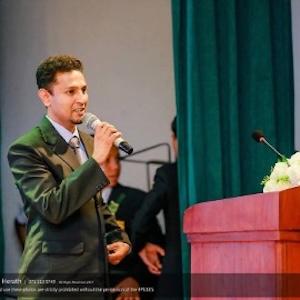
Dr. Thilakawansha Chandrathilake is a Senior Lecturer and the Director of the Center for Sustainability at the Department of Forestry and Environmental Science (DFES), University of Sri Jayewardenepura (USJ), Sri Lanka. He is also a Board Member of the Central Environmental Authority (CEA), the apex body responsible for environmental protection, conservation, and management in Sri Lanka.
Dr. Chandrathilake holds a BSc (Hons) in Forestry and Environmental Science from USJ, Sri Lanka, an MSc in Environmental Engineering from Saitama University, Japan, and a PhD in Forest Science from The University of Tokyo, Japan. He specializes in eco-hydrology, forest ecology, water resource management, and biodiversity conservation. His research contributions focus on forest hydrology, climate resilience, and environmental impact assessment, with several peer-reviewed publications in high-impact journals. His expertise has played a key role in policy development, national conservation strategies, and environmental governance in Sri Lanka. Dr. Chandrathilake serves as a Committee Member of the National Forestry Sector Research Committee of the Department of Forest Conservation, Sri Lanka, and contributed to the revision of the Forestry Sector Master Plan (Forest Policy) in Sri Lanka. He has also served as the National Environmental Specialist for donor-funded projects in Sri Lanka and as a Consultant Ecologist for several nationally significant Environmental Impact Assessments (EIAs).
He has collaborated with The University of Tokyo (Japan), Deakin University (Australia), Sri Lanka’s Ministry of Environment, and many other government institutes, advancing scientific knowledge in forestry, ecosystem conservation, and urban forestry. As the former President of Section B (Agriculture and Forestry) of the Sri Lanka Association for the Advancement of Science (SLAAS), he has played a vital role in shaping national research agendas. His leadership in forest restoration and sustainability initiatives continues to influence Sri Lanka’s environmental policies and conservation efforts.

Prof. Larry Lopez is a full Professor in the Department of Forestry at the Faculty of Agriculture of Yamagata University, Japan. He is the director of the The laboratory of Smart Forest in the Faculty of Agriculture, Yamagata University. He graduated with the degree of Bachelor in Meteorology from the Faculty of Science, Universidad Nacional Agraria La Molina, Lima, Peru. From 1995 to 2003, with the sponsorship of MEXT (Ministry of Education and Sports of Japan), I joined the MSc and Ph.D. Program at the Graduate School of Environmental Sciences, Hokkaido University. His research interest is on forest carbon, water and nutrient cycles and in recent years the use of Deep Learning to design more efficient and precise models to monitor forest ecosystems using UAV-acquired images. His laboratory, the laboratory of Smart Forest in Yamagata University conducts research on the relation of forest ecosystems with their surrounding environment by means of a multidisciplinary approach that involves soil science, meteorology, hydrology and precise remote sensing.
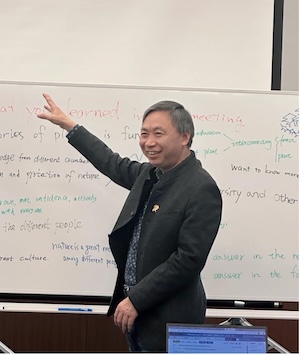
Prof. Chunlin LONG is a full professor at Minzu University of China, one of China’s prestigious universities located in Beijing. He made significant contribution in fields of agrobiodiversity and biodiversity, botany, ethnobiology, natural products, and plant taxonomy. In particular, Prof. Long has studied the relationships between people and plants in different linguistic groups through multi-disciplinary approaches. He published 438 papers in national and international journals. He is a prolific writer and authored 25 books and 19 patents of innovations. Prof. Long has been awarded 19 prizes.
Prof. Long is currently the Chair of Ethnobotanical Committee of China Wild Plant Conservation Association, Vice-President of Chinese Association of Ethnobotany, and Vice-Chair of Committee of Seed Science & Technology, Botanical Society of China. He serves as the Associate Editor of “Genetic Resources and Crop Evolution”, and “Journal of Ethnobiology and Ethnomedicine”. He is also the editorial board member of various journals including “Archives of Pharmacal Research”, “Biodiversity Science”, “Diversity”, and other journals. Prof. Long is a member of various expert committees or steering committees of Chinese government agencies, such as Ministry of Education, Ministry of Agriculture and Rural Affairs, National Forestry and Grassland Administration, and Ministry of Natural Resources.
Professor Soyeon Kim is a professor at Catholic Kwandong University located in Gangneung, Kangwon-do, and has been working there since 2022. Previously, she completed her bachelor's, master's, and doctoral studies at Kangwon National University and worked as a senior researcher at the Forest Science Research Institute. Her major is forestry management, it is a field that deals with both economics and public interest. Based on this, she is conducting research on forestry engineering and forest recreation. Her recent research was in the medical field to verify the scientific effectiveness of forest healing for each subject using forest resources. She operates a forest healing instructor training institute to produce experts in the field. She is also researching about forest business models, where she utilizes forest culture. Her ultimate goal is to enable mountain owners to generate profitability through diverse forest management and to contribute to the local community.

Professor and Lead Expert at the Chinese Academy of Forestry (CAF), Director of the Chinese Forest Ecosystem Positioning Research Network Management Center, and Doctoral Supervisor. He serves as the Principal Investigator of the Long-term Ecosystem Observation and Network Management Research Group at the CAF Institute of Forest Ecology, Environment, and Protection, and is a member of the China National Committee for the Global Climate Observing System (GCOS). Dr. Wang specializes in long-term observation and modeling of key terrestrial ecosystem processes, forest ecosystem service evaluation, ecological compensation mechanisms, eco-GDP accounting, and standardization systems for forest ecosystem monitoring. His work integrates scientific insights into national ecological policy-making, advancing sustainable forest management frameworks in China.

Prof. Dr Sri Rahayu is the Head of the Laboratory of Health and Protection, Faculty of Forestry Universitas Gadjah Mada (UGM) Yogyakarta, Indonesia, and has been a Lecturer on Forest Pathology, Forest Health, and Forest Protection since 1993 up to Now (2025), Coordinator of IUFRO WP 7.02.07 Diseases and Insects of Tropical Forest Trees since 2010 up to Now. Most publications and research experiences on Forest diseases in the Tropics, particularly on rust diseases. Has author in over 50 publications in International and National Journal. An active member of some professional societies such as APFISN (The Asia-Pacific Forest Invasive Species Network) and INVASIVESNET (International Association for Open Knowledge on Invasive Alien Species), APAFRI (Asia Pacific Association of Forestry Research Association. Principle contact of JSPS-C2C 2021-2023, and GX/DX Network 2024-2026 from Indonesia. Concerning forest culture, she has principally assessed Forest Health and Tree risk assessment in Forest recreation, Forests in sacred sites, Urban Forest, and arboretum.

Dr. Yen Yen Sally Rahayu, Indonesian, postdoctoral fellow at National Research and Innovation Agency (BRIN)-Indonesia. She earned BSc in chemistry, MSc in biochemical science and technology, and PhD in agricultural development studies and interdisciplinary social design and management at the University of Tokyo. Research interests: area studies, food chemistry, and human nutrition.
Her research focuses on (re)valuing biodiversity in today's society. Currently, she is engaged in transdisciplinary area studies exploring the nexus between wild edible plant biodiversity, nutrition, and well-being of rural/local communities in Indonesia.

Dr. Haruo Saito is Director of Arboricultural Research Institute, one of the regional forests of The University of Tokyo Forests. He has specialized in forest policy and has widely studied the relationship between forests and humans from the perspectives of ethnobotany and ethnomycology, as well as commons. He has been involved in ethnographic research on edible plants and fungi for over 20 years and has recently expanded his research to include the culture of wood use.
Prior to his arrival at Arboricultural Research Institute, he had worked at the Fuji Iyashinomori Woodland Study Center of The University of Tokyo Forests for 16 years. During that time, he had engaged in practical research on forest management focusing on recreational and healing functions of forests, and on building relationships between local communities and forests.
Presentation
Both oral presentation and poster presentation participation is warmly welcome! Presentations and discussions during the meeting will be in English.
We look forward to receiving abstracts for your poster presentations.
The abstract submission is only possible through the on-line procedure. Please, carefully follow the instructions before submitting the abstract.
Guidelines for Poster Presentation
Registration
Please fill out and submit the registration form at this link. We will reply to you by e-mail after reviewing the content.
Registration Form
国内参会者请填写此链接https://f.wps.cn/g/2eRxLtVi/ 无需重复填写英文表格
Registration Fee
For all participants, the fee is USD 600 (equivalent to RMB 4,200 or JPY 90,000), and for students, it is USD 300 (equivalent to RMB 2,100 or JPY 45,000). This fee covers:
- Accommodation for four nights (one bed in a shared twin room for each participant)
- Meals (breakfast, lunch, dinner, and tea-break snacks from April 18th evening to April 22nd morning)
- Transportation during the meeting
- Conference fee
- Technical tours on April 21st
If a single room is preferred, an additional charge of USD 110 (equivalent to RMB 800 or JPY 17,000) will be applied. Participants who opt not to join the technical tour and depart on April 21st will receive a USD 80 discount (equivalent to RMB 500 or JPY 12,000) on the conference fee.
Payment Methods
If you have an Alipay account, please scan the QR code below via the Alipay app to pay the fee in RMB and include your name in the payment remarks. International participants may also pay in cash (RMB or USD) upon your arrival at the venue.

Important Dates
- Registration for the conference: April 18, 2025
- Registration for presentation title: March 31, 2025
- Abstract and poster submission: April 12, 2025
- Both oral presentation and poster presentation participation is warmly welcome!
Contact Information/ Symposium Secretariat
Huaiyue Liang /Phone: +8615901011130/ email: lianghuaiyue@hainanu.edu.cn
Wan Li / Phone: +8038973520/ email: rien@uf.a.u-tokyo.ac.jp
Organizer
- FOCUS-Asia Committee
Dr. Hui Zheng (Hainan Forest Health International Research Center, China)
Dr. Liang Huaiyue (Hainan University, China)
Dr. Saito Haruo (The University of Tokyo Forests, The University of Tokyo, Japan)
Dr. Fujiwara Akio (The University of Tokyo Forests, The University of Tokyo, Japan)
Dr. Ishibashi Seiji (The University of Tokyo Forests, The University of Tokyo, Japan) - Hainan Forest Health International Research Center, China
- Hainan University, China
Designed by CSS.Design Sample